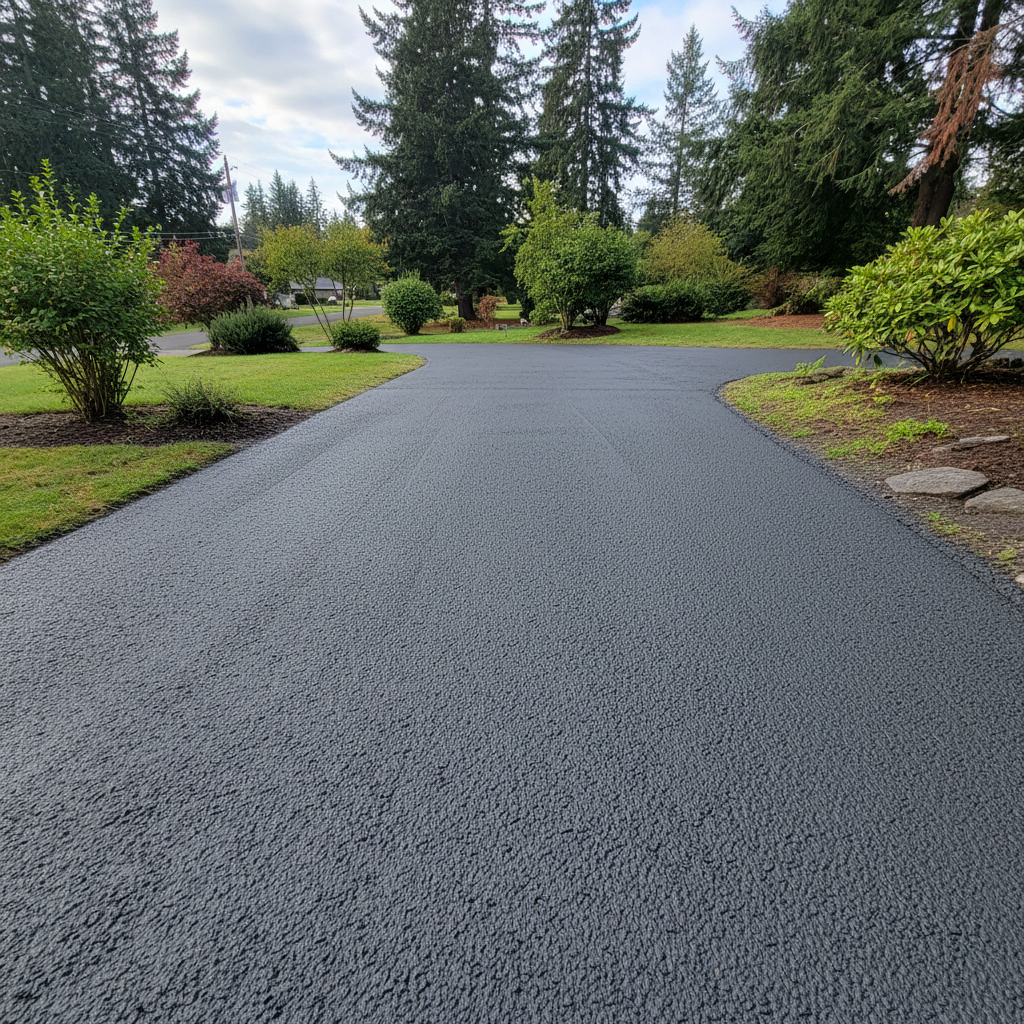
Alright, let's talk about slurry coating. You've got an asphalt driveway, it's looking a little faded, maybe some small cracks are popping up, and you're wondering if a slurry coat is the answer. Often, it is! But it’s not some magic fix, and whether you can tackle it yourself or need to call someone like us at Quantum Asphalt Solutions really depends on a few things.
So, What *IS* Slurry Coating, Anyway?
Simply put, a slurry coat is a protective layer you put right over your existing asphalt. It's a mix of asphalt emulsion, aggregate (that's just tiny, fine sand or rock), water, and some additives. Think of it like a really heavy-duty paint job for your driveway, but it does more than just look good. It seals the surface, fills in those hairline cracks, and protects the underlying asphalt from the sun's UV rays, rain, and even oil spills. Here in Sutherlin, with our wet winters and hot summers, that kind of protection is pretty darn important for keeping your asphalt from breaking down too fast.
When Slurry Coating Works (and When It Doesn't)
Slurry coating is best for driveways that are already in pretty decent shape. I'm talking about minor surface wear, small cracks (we mean hairline here, not quarter-inch wide), and just general fading. It's a preventative measure, sure, but it's also a nice cosmetic upgrade.
- If your driveway has deep, wide cracks (anything you can stick a credit card into, for example), significant potholes, or areas that are crumbling, a slurry coat won't fix a thing. You'd basically be putting a band-aid on a broken leg. Those issues need proper asphalt repair first – crack filling, patching, or maybe even a full overlay.
- If your driveway is relatively new and looks perfect, you probably don't need it yet. Give it a few years.
- If your driveway is old and completely shot, a slurry coat will just be a waste of your hard-earned money. At that point, you're probably looking at a full replacement.
So, take a good, hard look at your driveway. Is it mostly sound, just a bit tired? Then a slurry coat could be a fantastic way to extend its life and really boost its curb appeal.
DIY Slurry Coating: What You Can Actually Do
Can you slurry coat your own driveway? For smaller, very well-maintained driveways, absolutely, it's doable. But it's a lot more work than most people realize.
Before You Start (Whether DIY or Pro)
- Clean, Clean, Clean: This step is absolutely critical. You need to power wash the entire surface to get rid of all dirt, oil, grease, and any loose debris. Any contaminants left behind will stop the slurry from bonding properly. Let it dry completely.
- Address Small Cracks: Fill any cracks up to about 1/8 inch wide with an appropriate asphalt crack filler. Let that cure according to the manufacturer's instructions.
- Edge Work: Trim back any grass or weeds growing along the edges of your driveway. You want a nice, clean line.
- Check the Weather: This is huge, truly. You need at least 24-48 hours of dry weather with temperatures consistently above 50°F (and not too hot, like over 90°F, or it'll cure way too fast). No rain in the forecast! This is especially important for us here in Sutherlin, where a sunny morning can turn into an afternoon shower without much warning, especially in spring or fall.
The DIY Application
If you're going the DIY route, you'll buy buckets of asphalt sealer (which is basically a simplified slurry mix for homeowners) from a home improvement store. You'll need:
- Stiff-bristled brooms or squeegees for spreading.
- Brushes for edging.
- Safety gear: gloves, old clothes, eye protection. This stuff is messy, believe me.
- A mixing paddle for your drill if the sealer needs mixing.
You'll typically pour a line of sealer across the driveway and then use your squeegee to spread it evenly and thinly. Work in sections. Overlap slightly. The key here is thin, even coats. Don't glob it on. It's tempting to think more is better, but it's not. Thick coats won't cure properly and will just peel right off.
You'll need to keep people, pets, and vehicles off it for at least 24-48 hours, maybe even longer depending on humidity and temperature. Don't rush it, whatever you do.
When to Call a Pro (Like Quantum Asphalt Solutions)
Honestly, for most driveways, especially anything larger than a small single-car pad, calling a professional is usually the smarter move. Here's why:
- Equipment: We've got the right power washers, industrial-grade crack fillers, and specialized squeegees and spray equipment that ensure a consistent, even application.
- Materials: We use commercial-grade slurry mixes that are more durable and last longer than the stuff you buy at the big box store. These often have higher solids content and better additives, which makes a difference.
- Experience: We know how to prep the surface properly, how to handle different types of asphalt, and how to apply the material efficiently without streaks or uneven spots. We've seen it all, from the older homes up on the hill with their steep drives to the flatter, newer developments.
- Time and Effort: This is a physically demanding job. It takes a full day or more of hard labor for a decent-sized driveway. Is your weekend really worth that much sweat and potential back pain?
- Warranty: A reputable contractor will stand behind their work. If something goes wrong, they'll fix it, simple as that.
If your driveway has more than just hairline cracks, or if it's a larger area, or if you simply don't have the time or inclination for a very messy, labor-intensive project, give us a call. We'll give you an honest assessment of your driveway's condition and whether a slurry coat is the right solution, or if you need more extensive repairs. We'll also tell you if it's something you could reasonably do yourself, though I'll always recommend a professional job for the best longevity and finish, you know?
After the Slurry Coat
Once it's done, whether you did it or we did, you've got to let it cure. Seriously, stay off it. No driving, no parking, no turning your wheels on it for at least 24-48 hours. The longer, the better. You'll see it go from a dark, wet-looking black to a duller, matte finish when it's fully cured. Give it a good few days before you start driving on it regularly, especially if you're parking heavy vehicles.
A well-applied slurry coat should last you several years, typically 3-5, depending on traffic, weather, and the quality of the original asphalt. It's a great way to protect your investment and keep your property looking sharp.