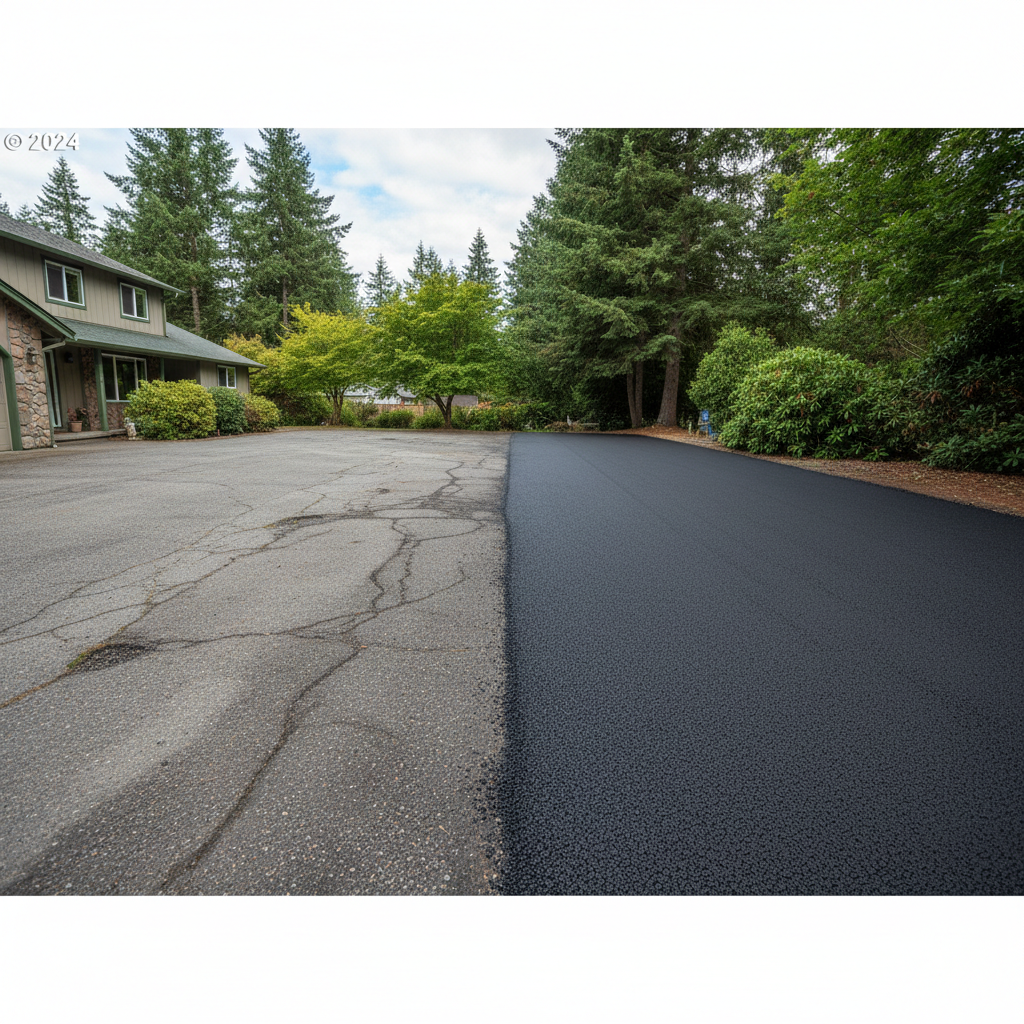
So, your asphalt driveway's seen better days, huh? Cracks, potholes, maybe it just looks plain tired. When it's time to fix it right, you're probably thinking about milling. But what kind of milling? Most folks don't realize there are two main ways to tackle this: full-depth reclamation (FDR) or just milling off the top layer. I've done both plenty of times right here in Sutherlin, and each method has its own place.
What's the Difference, Anyway?
Let's clear this up first. Milling, generally speaking, is when we grind up the existing asphalt surface. We use a big machine with a rotating drum and carbide teeth to chew up the old stuff. That material, called RAP (Recycled Asphalt Pavement), can then be reused. It's a smart, sustainable way to deal with old pavement, no doubt about it.
Now, the real difference between these two approaches comes down to how deep we go and what we do with the base underneath.
Option 1: Milling the Top Layer (Partial Depth)
This is probably what most people picture when they hear 'milling.' We're talking about grinding off just the top inch or two, maybe three, of your existing asphalt. Think of it like giving your driveway a haircut. We take off the worn-out surface, leaving the base layer mostly untouched. Then, we lay down new asphalt on top of that prepared, stable base.
- Cost: Generally, this is the more affordable option upfront. Less material to remove, less new material needed, and less work on the base, you know?
- Durability: If your base is in good shape – no major soft spots, good drainage, not crumbling – then a top-layer mill and overlay can last a good long time. You're essentially putting a fresh, strong cap on a solid foundation. But if your base is failing, this is just a band-aid.
- Maintenance: Standard asphalt maintenance applies here. Sealcoating every few years, fixing small cracks as they appear. It's pretty straightforward stuff.
- Appearance: You get a brand-new, smooth, black surface. Looks fantastic, just like a new driveway should.
- Best for: Driveways with surface issues like cracking, raveling, or minor rutting, but where the underlying gravel base is still strong and stable. If you've got good drainage and the ground isn't moving, this is a solid choice.
Option 2: Full-Depth Reclamation (FDR)
This is the big guns. With FDR, we're not just taking off the top couple of inches. We're grinding up the entire asphalt layer, and then some. We go deep, often bringing some of the underlying gravel base into the mix. We might even add stabilizing agents like cement or lime to the recycled material right there on site. Then we compact it all down to create a super-strong, uniform base before laying down new asphalt.
- Cost: This is definitely more expensive upfront. It's a more intensive process, requiring more heavy equipment, more time, and sometimes extra materials for stabilization.
- Durability: This is where FDR really shines. You're essentially rebuilding the entire pavement structure from the ground up. It creates an incredibly robust and stable base that can handle heavy loads and resist cracking for decades. If you've got a driveway that's seen a lot of heavy traffic, or if your existing base is completely shot, this is the way to go for maximum longevity.
- Maintenance: Because the base is so strong, you'll likely see fewer issues down the road. Standard maintenance is still good practice, but you might find you need less frequent crack sealing or other repairs.
- Appearance: Just like with partial depth, you end up with a beautiful, brand-new asphalt surface. The difference, of course, is what's underneath.
- Best for: Driveways with significant structural problems. We're talking about widespread alligator cracking, deep potholes, areas that are constantly sinking, or driveways on unstable ground. If your driveway is a mess because the base failed, you need FDR. I've seen plenty of driveways in the older parts of Sutherlin, especially those built on softer, clay-rich soils, that really benefit from this approach. It's the long-term fix for a truly failing pavement.
My Recommendation for Sutherlin Homeowners
Look, I'm not going to tell you one is always better than the other. It really depends on the condition of your specific driveway and what you're trying to achieve. If your driveway is just showing its age with surface cracks and some wear, but it's otherwise solid, then milling the top layer is usually the smart, cost-effective choice. You'll get years of good service out of it.
However, if you've got a driveway that's constantly breaking up, if you're seeing standing water in spots, or if you know your base is just crumbling away, then you need to consider full-depth reclamation. It's a bigger investment, sure, but it's the only way to truly fix those deep-seated problems. You'll get a driveway that's built to last, handling our wet Oregon winters and whatever else gets thrown at it.
The best way to figure out what's right for you? Get a pro out there to take a look. We can assess your driveway's condition, check the base, and give you an honest recommendation. Give Quantum Asphalt Solutions a call, and we'll come out and give you the lowdown on what makes the most sense for your place.